
Why Stain and Dye Aren’t Interchangeable on Hardwood Floors
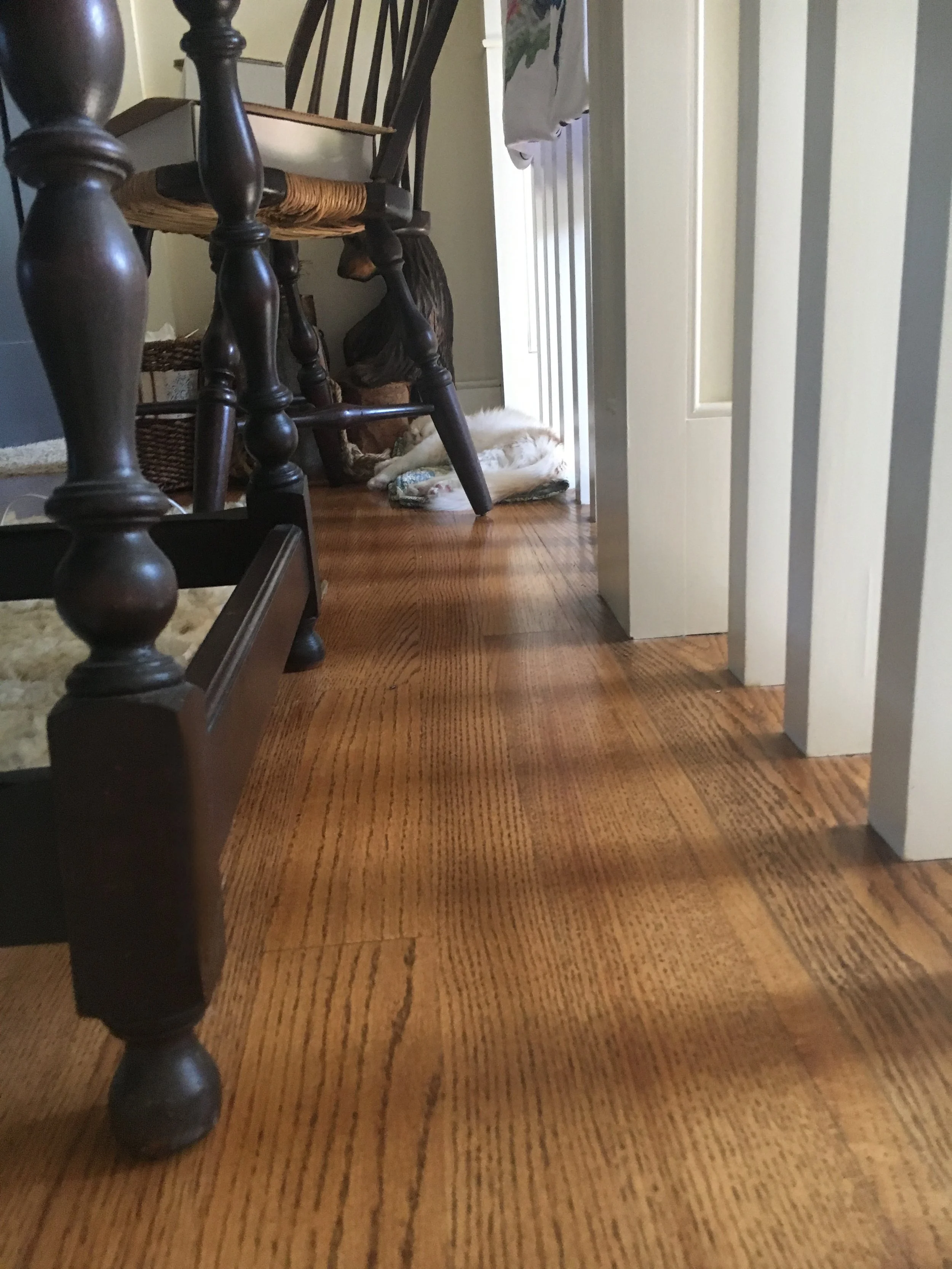
One of the things I’ve learned being married to a builder is that there is always more happening beneath the surface than you realize.
Hardwood floors are a perfect example.
For the longest time, I thought stain was stain. You pick a color, you apply it, you seal it, and that’s that. But recently Andrew explained something to me that completely changed how I see wood finishing.
There’s a difference between stain and dye.
And it comes down to molecule size.
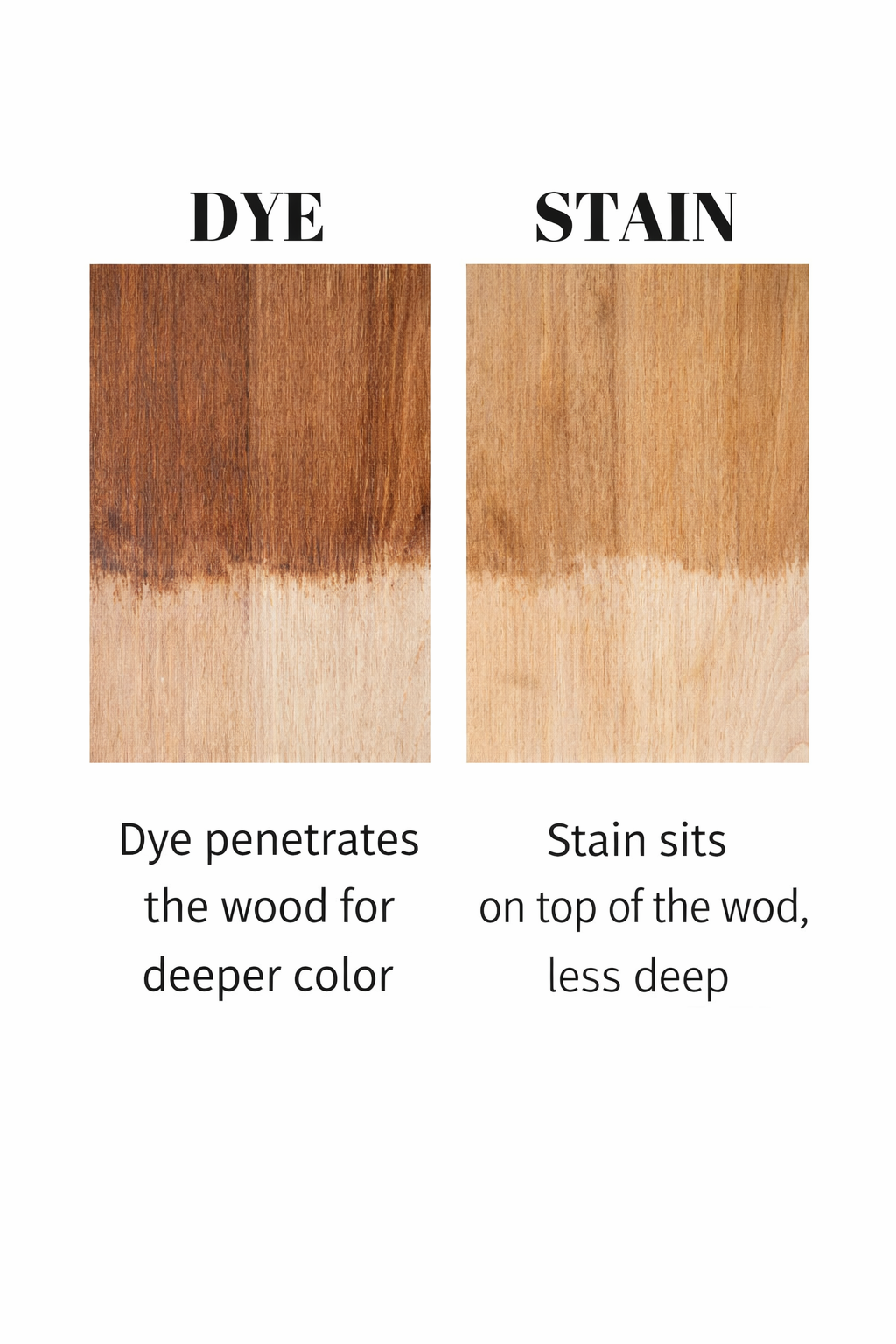
Wood dye has much smaller pigment particles than traditional stain. Because the molecules are smaller, the color penetrates deeper into the wood fibers. It soaks in more evenly and creates a rich, dimensional look that almost feels layered from within the grain itself.
Stain, on the other hand, has larger pigment particles. Those particles don’t travel as deeply into the wood. Instead, they settle closer to the surface. The tone can be very similar — even identical in color — but the depth can feel different.
To someone walking through a home, it may not register consciously.
To a builder, it absolutely does.
That conversation made me realize how much science lives inside what we often think of as purely aesthetic decisions. It’s not just about choosing a “pretty” color. It’s about understanding how products interact with natural materials — and how those materials respond over time.
Wood is organic. Every board absorbs differently. Light changes everything. Even chemistry plays a role in how color ultimately shows up in a space.
Being the builder’s wife means I get a front-row seat to these little masterclasses. And the more I learn, the more I appreciate that the difference between good and exceptional often lives in details most people never see.
And honestly, that’s my favorite part.
– XO, The Builder’s Wife